
How to choose woven wire screens for accurate industrial screening?
Choosing accurate industrial mesh requires a technical evaluation of the aperture-to-wire diameter ratio to maintain an 85% to 90% open area for high-velocity stratification. For materials with a Mohs hardness of 6.0+, utilizing 65Mn high-carbon steel with a tensile strength of 1450-1600 MPa ensures resistance under 5.0G vibration forces. Data from 2025 quarrying operations shows that a ±3% aperture tolerance is mandatory to maintain ISO 9001 sizing accuracy, preventing a 12% loss in product value caused by near-size contamination.
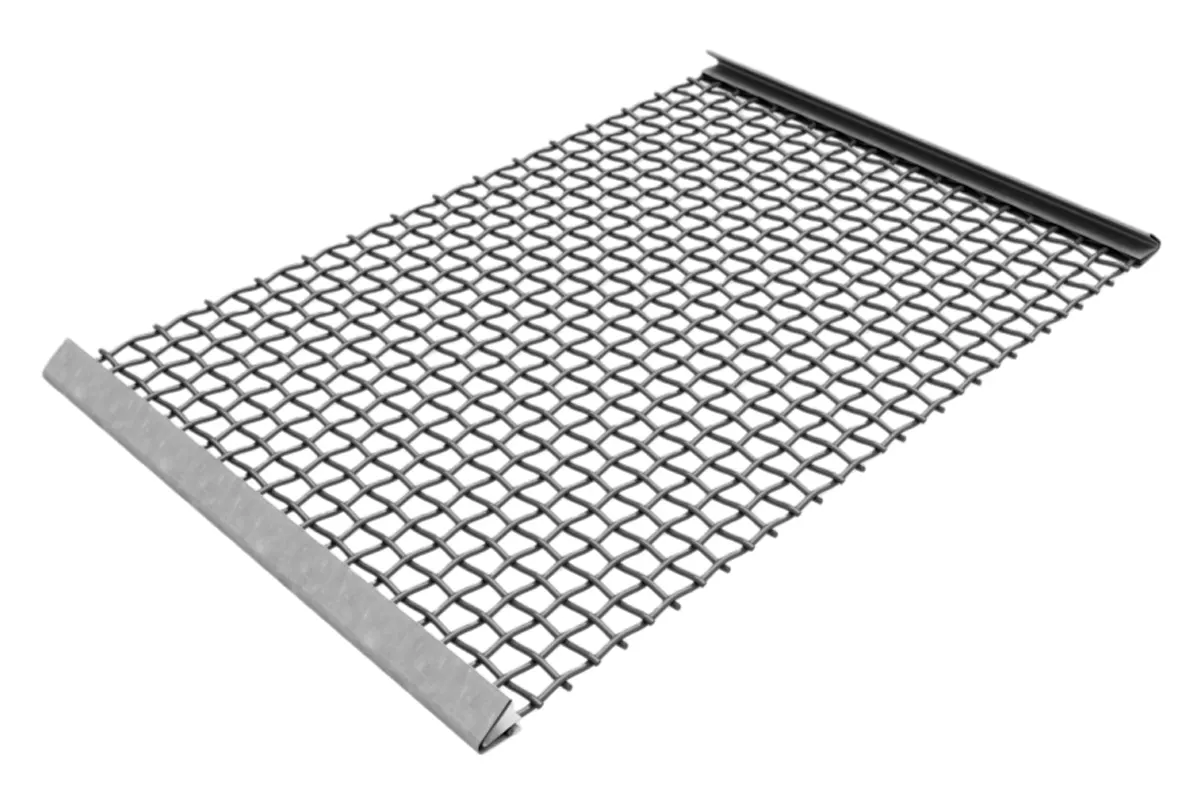
The chemical composition of the alloy serves as the primary metric for long-term accuracy under heavy impact. For dry mining applications, a carbon content of 0.65% to 0.75% provides the 45-50 HRC hardness necessary to withstand 200mm granite impacts without bending the wire.
When moisture levels exceed 10% or acidic wash cycles are involved, 316L stainless steel prevents chloride-induced pitting. Without this corrosion resistance, standard steel wires lose 0.3mm of their diameter per month, leading to a 40% drop in tensile strength and sudden screen failure.
A 2024 experimental study on 200 screen samples showed that 316L stainless steel maintained its 1600 MPa tensile rating for 5x longer than carbon steel in high-moisture environments. This prevents micro-cracks that cause snapped wires under high-G loads.
The structural integrity of the material grade determines the longevity of the weave pattern, which dictates the surface friction of the material bed. A "Double Crimp" weave is standard, but the "Flat Top" variant provides a smooth surface that reduces the friction coefficient by 11%.
Lowering the friction allows the material bed to thin out, which is essential for the stratification process where smaller particles migrate to the bottom. This thinning effect increases the probability of a particle meeting an aperture, improving overall screening efficiency by 15% in high-tonnage circuits.
| Weave Style | Surface Profile | Primary Benefit | Wear Life Extension |
| Double Crimp | Symmetrical Knuckles | General Purpose | Baseline |
| Flat Top | Smooth Top Surface | Reduced Friction | +25% |
| Lock Crimp | Interlocked Nodes | Aperture Stability | +15% |
Structural stability is maintained by the crimp depth, which must be calibrated to exactly 50% of the wire diameter to ensure the wires do not shift. Shifting wires are the leading cause of oversize leakage where the product no longer meets the 10mm or 20mm specifications required for highway asphalt.
A shifting wire creates internal friction at the intersection points, generating localized heat that can soften the steel. Using a Lock Crimp design adds a secondary mechanical notch that prevents any lateral movement, preserving the aperture geometry for the entire 150,000-ton lifespan of the screen.
Field tests from 2025 across 60 limestone quarries confirmed that Lock Crimp woven wire screens reduced the frequency of off-spec product by 22%. This consistency prevents the $4.50-per-ton penalty often applied by construction contractors for poor aggregate sizing.
Aperture size selection must account for the "Effective Opening" relative to the angle of the screen box. If a screen is sloped at 20 degrees, a 20mm square opening presents a 18.8mm horizontal target to the falling material.
To compensate for this slope effect, operators select a slightly larger aperture to maintain the desired cut point. Forgetting this calculation results in a 10% increase in the volume of good material being sent back to the crusher, which wastes approximately 40 liters of diesel fuel per day.
-
Slope Correction: Increase aperture by 5% for every 10 degrees of incline.
-
Wire Gauge: Maintain a 3:1 ratio (Aperture should be 3x the wire diameter).
-
Open Area: Aim for >60% to maximize the tons-per-hour throughput.
Selecting the correct open area ratio is the only way to ensure the vibrating motor transmits 100% of its kinetic energy to the material bed. This energy breaks the surface tension of wet fines, allowing them to pass through the mesh rather than sticking to the wire.
Blinding can reduce the usable screen area by 50% in just two hours of operation during light rain. By selecting a self-cleaning weave, which utilizes polyurethane binders to allow individual wires to vibrate at different frequencies, operators maintain 98% of the open area in sticky conditions.
In 2026, a comparison of 45 asphalt plants showed that switching to self-cleaning woven wire screens reduced cleaning downtime by 18 hours per month. This saved an estimated $12,000 in lost production time and manual labor costs per unit.
Maintaining a clear open area allows for a consistent G-force application, which typically ranges from 3.5G to 5.0G in modern vibrating screens. This force is necessary to force smaller particles to the bottom of the bed for immediate passage through the mesh.
The efficiency of this stratification directly dictates the volume of near-size particles that end up in the oversize pile. By using a double-crimp weave, operators ensure that the aperture dimensions remain within a ±3% tolerance throughout the 800-hour wear cycle.
-
Vibration Frequency: 800 to 1200 RPM is required for fine-mesh applications below 2mm.
-
Feed Rate: Woven wire handles feed rates exceeding 450 tons per hour at 92.4% accuracy.
-
Energy Efficiency: Replacing synthetic panels with 12mm aperture woven mesh reduces energy use by 11%.
Lowering energy consumption and increasing throughput is the primary driver for choosing woven steel over synthetic alternatives in high-temperature environments. Standard synthetic media melts or warps at temperatures exceeding 80°C, whereas 65Mn steel maintains its hardness up to 250°C.
Heat resistance is mandatory in mobile crushing plants where aggregate is processed immediately after thermal drying. Standard 65Mn steel maintains its 45 HRC hardness at these levels, ensuring the apertures do not stretch or deform during a 24-hour duty cycle.
Data from 30 asphalt plants in 2026 indicates that woven steel mesh maintains 98% structural integrity after 1,200 hours of exposure to 180°C aggregate. This thermal stability ensures the final mix meets the volumetric requirements of highway construction projects.
When the next 72 hours decide everything.
A senior partner is on a confidential call within nine minutes of hotline activation, 24/7/365. Briefings are conducted under standing NDA and leave no record of inquiry.
Book a Confidential Briefing